The Enjoyment of Rain

When I first stepped outside this morning I could hear the water gurgling down the pipes and into the gutters. This started me thinking whether it had been raining.

It is the middle of summer, here in Western Australia, and where I live it is not the usual time for rain. I am wearing a t-shirt and it’s warm. Occasionally, we will get mornings like this, and those are the mornings one may wish to dance in the rain.

‘Hmm,’ I thought. ‘The atmosphere around my home seems slightly misty. Perhaps it rained a little earlier and I’m simply hearing the after-effects.’

To check this theory, I looked at the sand and I looked at the fence, but could not see any evidence there had been rain. The downpipes continued to gurgle (as they do while I’m writing this).

‘If there is water coming down those pipes, it must have been raining at some point, so why can’t I see it,’ I thought to myself. I decided to step out from under the roof of my tiny patio, and onto the sand of my backyard. Immediately it could be felt, a warm glossing liquid over my skin. The soft, almost invisible to the naked eye, gentle light rain upon my face and hair felt like someone spritzing me, but without the sound of the spritzer, the someone, or the harsh squirt I might feel on my face.

‘So,’ I nod to myself now. ‘This is awesome. I quite like it.’

As I think, and look around, and hear the giggling and glugging of the drainpipes begin to quieten, and see the cat on the wall at the back fence, I know he and the other creatures up with me this morning are all enjoying the gentleness of this warm and sweet gift of rain, as small as it may be.

I believe the cat has gotten over it, though. He’s currently digging another hole to Bermuda.

I’ll explain the Bermuda theory in another post perhaps. Today, we simply enjoy the experience of rain.

What is a fairy tale?

‘Doing this properly or not, are we?’

My translation is too rough for you. You can’t do this thing and I cannot help you.

The small green frog has nestled himself within the zucchini bushes and frets about what he will do next to escape the cat.

Zucchini plant in our garden.

The cat is merely a small white and black moggie who considers himself a saviour to humans. He is rather proud of himself – which is very catlike and normal for cats.

‘Do I need saving from a frog,’ thinks the human. ‘There really are not enough of them around for me to be saved from them. Perhaps you should reconsider the circumstances of el cato.’

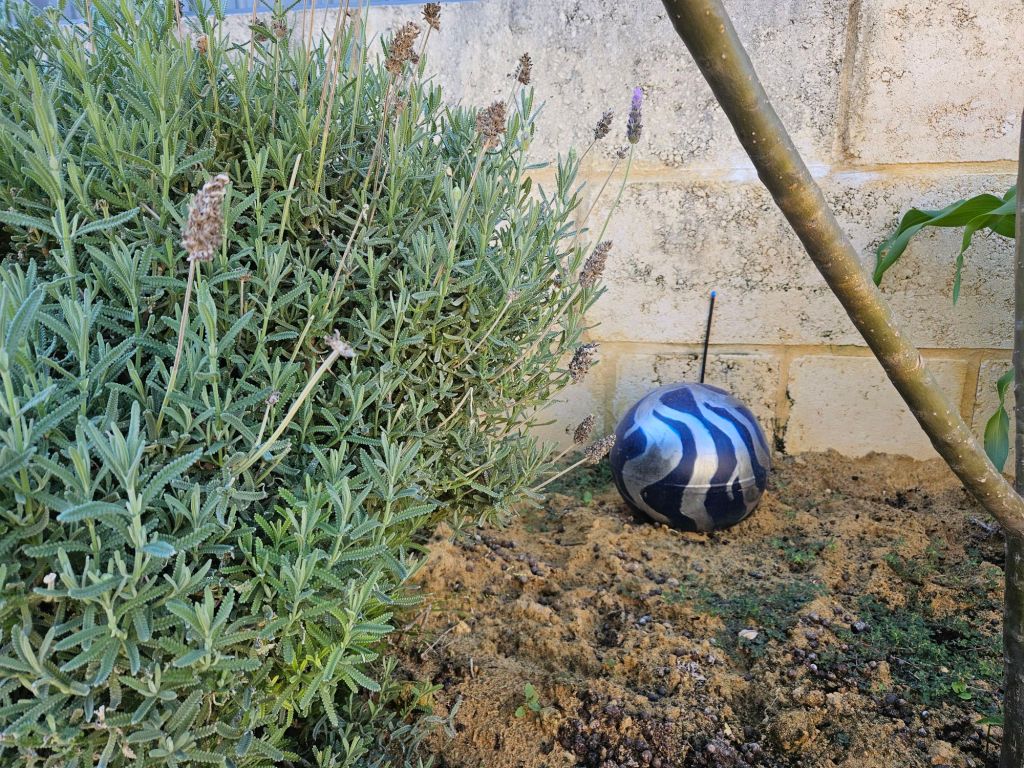
The circumstances of el cato were deliberately falsified by other human beings. We do not return to that horrible place. He thinks this often and it has been agreed the cat’s “mother” had been right all along. He sees a large and heavy ball by a wall, coloured to resemble waves on water or electricity (which are really quite similar). It was a pond the princess had been playing beside in the original story by the brothers Grimm or was that Hans Christian Anderson? This is the purpose of the frog and the “maid” – to share these stories with new thinking and similarities that show how the blending is done.

The frog can hear this from under the large leaves of the zucchini plant. ‘What about me,’ he burps quietly to himself. ‘Do I need saving, or can I just dig myself a hole?’

There are many questions floating around in the small garden of the family. The frog suggests the people mama do not go out to the back fence because a kangaroo child is also listening in.

They have all watched the child of the small brown kangaroo follow his mother back and forth along the hot street. Some have seen how she gets stuck when a route she used one morning is blocked the following morning and she must feed her child by a fence with no openings she can discern. Some think they should be fed, although this is not the way of the kangaroo. All she needs to find her offspring (and here the frog would grin as his mouth is wide and the perfect shape to perform such an act) is some narrow-leaved plants with lovely sweet pieces that sit just under the soil.

‘That is all I need as well,’ thinks the frog. ‘Just some plants that are damp enough I can find some insects to eat. I am very good at hunting insects.’

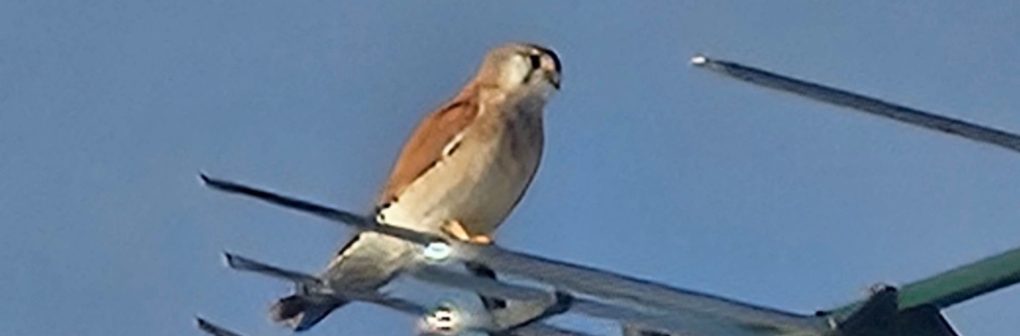
‘How is the translation going,’ questions the female bird. ‘Am I getting this right again?’

‘Understanding and doing is not the… damn it,’ says the frog around an insect whose legs are long and crunchy. ‘Then count me as I jump, for I would rather be a bearer of good news.’

Pleading with me will not work, for I did not put him here.

Can we see him yet, though? Is he rounded and full with new information? Can he see the light of day? Must he always be such a pain in the arse, or will the mother realise he is dreaming again?

Does she even know my Hame, thinks the kangaroo child, for he has learnt at least one language other than his own in recent years.

The mother looks up from her position at the table. ‘They are spying,’ she thinks to herself, and she is right, for they have been trying to write with her this whole time.

They do not wish to be horrible, thinks the frog, but they do not know why she thinks they are friendly.

‘I do not believe she ever thought they were friendly,’ the cat yells from the back door. ‘Oh whoops, I didn’t realise it was open,’ he thinks as the person stares down at him with vague irritation. Ducking his head to apologise for his own small thinking, he clicks and clacks his way down a dark corridor to where he knows a large and comfortable sleeping place awaits. ‘This is the only place that is friendly, and this is where I am staying. These are my people, and I am a cat.’

He thinks loudly out the window and a kangaroo child is frightened by his noisiness. 

‘Bugger off, I said.’

The little beast is dumbfounded. How did such a big thought come out of such a small cat? The cat smiles to himself. He has been training with humans, and learnt how to borrow their voices to make his own thinking louder. He leaps onto the mattress and gazes at the man who talks in his sleep.

‘This one continues to surprise me with these thoughts,’ says the wannabe demon of his large human counterpart. ‘Where is that frog again?’ He jumps off the bed.

The frog sneaks off with a plip and a plop to find himself a hole in the sand. He just wants to live another day and get some new ideas.

‘This one is too much for frogs,’ he thinks. ‘She doesn’t like me at all.’

He would be dumbfounded to know he was right.

A “recalibration” (retelling) of The Frog Prince, with dashes of Rapunzel. Spoken with Grimm determination in an Australian accent.

C.S Capewell.

‘Will You Dance with me, Cirro.’

Cirro glances up. His eyes are sharp and he takes in the person who is asking.

‘You are not supposed to ask me that. I am supposed to ask you.’

‘Well then.’ The one who has asked turns and begins to walk away. The one who has asked will sit down, and wait, if that is what is required. Perhaps, someone else will ask them to dance instead, or they will ask someone else.

Cirro leaps to his feet. ‘Wait.’ He does not grab the one who has asked him to dance by the arm, nor does he touch them, but they stop anyway, and turn to face him. ‘How do we do this dance,’ asks Cirro, because he was not the one who asked to dance in the first place, he is merely watching, and he has been watching for a long time.

‘I think you know,’ says the other person, and she smiles. ‘But I will show you anyway. Let us “expand” on this idea of one hundred and eighty degrees.’

Cirro begins to smile. He knows there are many things that are one hundred and eighty degrees, although some other people do not. ‘Do I turn my back on you now?’ he says.

‘Yes. And I will turn my back on you as well. This way, we are both facing outwards, and we are both at exactly one hundred and eighty degrees. Extend your arms, Cirro.’

Cirro extends his arms from his sides, and spreads his stance just enough so he is comfortable and strong. He feels the pressure of the other’s back against his, and knows the other is gazing out just as he is gazing out. What he does not see, the other one can see. This is the purpose, in this dance of one hundred and eighty degrees.

‘Now turn,’ says the other from behind him, and Cirro begins to turn.

‘Are we still at one hundred and eighty degrees,’ he asks politely.

‘I am, and you are. Despite our turning, we are both still at one hundred and eighty degrees. This is good.’

Cirro knows now that this is his friend. This one protects his back, just as he protects hers. This time, and by this person, he has not been asked to turn and face them, nor has he overstepped his mark. He has not gone to three hundred and sixty degrees, nor has he overstepped by five degrees. He is comfortable at one hundred and eighty degrees and knows his back is always protected, just as he protects the one who protects him.

‘Thank you,’ says Cirro.

‘And thank you,’ comes the reply.

And it is good.

About Face

Walk with me, Cirro?

The man does not ask this in an unkind way. He looks to his tall friend and asks politely.

‘What is it?’ Cirro is not feeling as friendly.

‘I wish to discuss with you the idea of one hundred and eighty degrees. Can we move this discussion to the horses? Will you mount up and we shall talk?’

Cirro does not remember his friend’s name. Cirro has forgotten many things. He looks down upon his friend who has taught him, and thinks he is better.

‘Your eyes are not blue this morning,’ Cirro says. ‘They are green.’

‘It is a trick of the light, Cirro. Shall I remind you who I am?’ 

This man’s hair is brown. It is not black, it is not the trick of gold, it is brown. Cirro is confused. He wants to view his own face, but is unable to see it as they move towards the ponies. There is no reflection for him.

The man holds a stirrup and turns back to Cirro. ‘This one? Or would you like to get up on the other?’

Cirro has been given a choice now. Should he take this horse or the other? The man has offered him this pony. Is there something wrong with it? He looks at the animal. Its hocks are low. It has a nice short back. Its tail carriage is neither high nor is it tucked under. He looks at its eyes. There is no ring of white around them. They are a horse’s eyes, not a demon’s.

‘Can I check its teeth?’

‘Are you buying it?’ The man asks. He grins.

‘No.’ Cirro is unhappy.

‘Then why bother checking its teeth? I just wish to know whether you want to ride with me, or not?’

‘I do not want to ride with you,’ Cirro says.

‘That is unfortunate,’ the man replies softly. ‘Can’t you ride?’

‘I can ride.’ His answer is fast, like a whiplash.

‘Can you cook?’

‘I can cook. What does this have to do with anything?’ Cirro begins to pace, and his friend, who is neither short nor tall, neither amazingly handsome (although, Cirro must admit, has a certain flair) or very ugly, begins to laugh.

‘Can you do a half-circle? Have you practiced your geometry?’ The man is grinning openly now, and his teeth are showing. Should Cirro check his teeth? He does not know.

‘I give up,’ says Cirro. ‘Let us ride on your horses and see where we go.’

‘Thank you,’ says the man. ‘Do you wish to know who I am now, Cirro? Or have you forgotten?’

‘I know who you are,’ says Cirro. ‘Let’s go.’

The truth of this is Cirro did not know who the man was. Cirro did not even know anymore if the man was a man. All Cirro knew, was that this person, for person it was, had indulged him for a short time, and was now giving him the opportunity to go. The man would let Cirro go back to his own place and time because the man knew Cirro was now capable of not being mean — for Cirro had learned control, and how to try to keep the lack of control he sometimes had hidden as much as he was able. As ‘the man’ had informed Cirro many times, one uses these emotions in writing to oneself, in writing a fiction, in painting, in music, or in dance or sport. Perhaps, one could even use these emotions in singing, if one had enough control. What one did not do, was steal other people’s emotions or stories, for they would never come across as real or true unless one had experienced them personally. This was what Cirro needed to remember.

I am not a man yet, thought Cirro. But, I’m getting there.

To be a true man, Cirro needed to learn how love changed over the years, and how it is often the man must bow to his wife, for she will be the mother of his children, and he must have respect and understanding. To lose a partner of many years, who is so different to a man, is devastating. Those little things he has grown used to, those little jars and tins of this and that he never used himself, but have remained in a cupboard or on a bench; the smell of a pillowslip, or the long distant memory of a certain scent. This is how true partnerships are formed and how the loss of them may turn a man bad if he does not remember the respect and care that went with them.

Turn around.